You want a clear view of what a driving career with LKW Walter looks like.
The company is known across Europe for its strong logistics network and consistent work for long-haul and regional drivers.
This guide outlines the requirements, benefits, and expectations so you can decide whether the job fits your goals.
What Makes LKW Walter Different
Knowing the company’s strengths helps set clear expectations. These keywords outline what makes LKW Walter stand out in Europe.
- Network – Large coverage across Europe with active long-haul routes.
- Stability – High shipment volume that provides consistent work.
- Modern Fleet – Trucks equipped with comfort and safety features.
- International Focus – Strong operations in cross-border transport.
- Dispatch System – Clear communication and organized scheduling.
- Reputation – Known for reliable logistics services.
- Work Structure – Predictable routes and planned rotations.
Driver Job Categories
Different driving roles exist within LKW Walter’s operations. These categories help clarify the type of work drivers handle.
- Long-Haul Driver – Handles cross-border transport across multiple European countries.
- Regional Driver – Works within shorter routes inside specific European zones.
- Contracted Partner Driver – Operates under partner companies that run assignments for LKW Walter.
- Dedicated Route Driver – Follows repeat routes with consistent customers.
- Intermodal Driver – Transports containers connected to rail and short-sea shipments.
Pay Structure and Allowances
LKW Walter’s pay structure aligns with common long-distance transport rates in Europe. The details below help set clear expectations for drivers.
- Base Pay – Most long-haul drivers in Central Europe earn €1,900–€2,400 monthly, depending on country and contract type.
- Mileage Pay – Average long-distance rates range from €0.14 to €0.18 per km, depending on route and region.
- Night-Out Allowance – Standard European “night-out” payments range from €45–€60 per night when resting in the truck.
- Meal Allowance – Many routes include €20–€30 per travel day for food and road expenses.
- Border-Crossing Pay – International trips typically add €10–€25 per border crossing, depending on complexity.
- Safety Bonus – Bonuses often range from €50–€150 per month for clean, incident-free performance.
- Performance Bonus – Some contracts add €100–€250 monthly for punctual deliveries and substantial route completion.
Eligibility Requirements
Basic requirements help confirm if a driver can legally and safely work with LKW Walter.
These points show the essential qualifications needed across Europe.
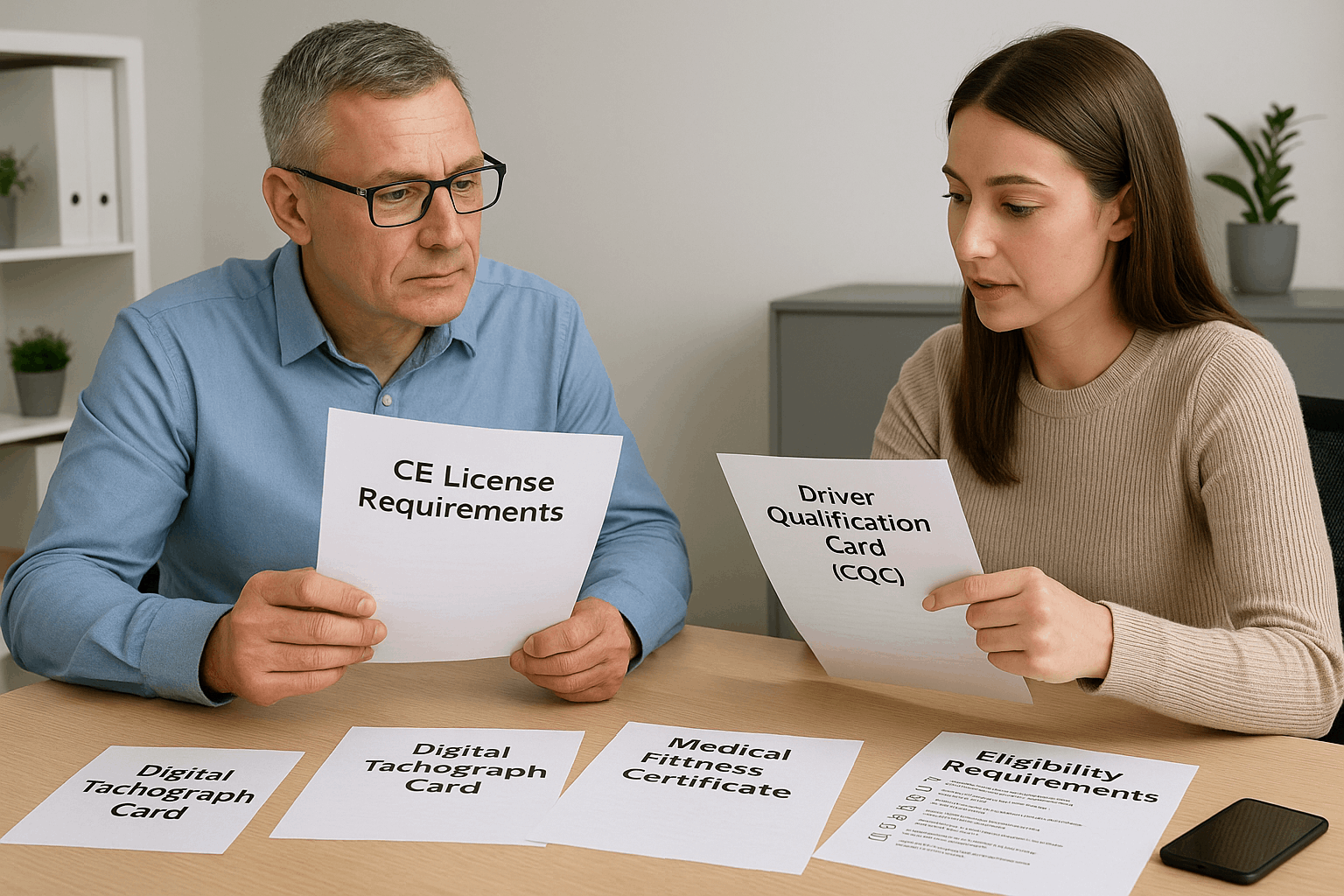
- CE License – Mandatory license for operating articulated trucks and heavy combinations.
- Driver Qualification Card (CQC) – Required proof of professional driver training under EU rules.
- Digital Tachograph Card – Needed for recording driving hours and legal rest periods.
- Valid Passport or EU ID – Necessary for identification and cross-border travel.
- Medical Fitness Certificate – Confirms physical ability to handle long-haul work.
- Clean Driving Record – Shows safe driving history and compliance with transport laws.
- Work Eligibility Documents – EU citizenship or a valid work permit for non-EU applicants.
- Basic English or German Skills – Helpful for dispatch communication and cross-border coordination.
Workload and Route Setup
Workloads at LKW Walter are structured according to distance and delivery demands.
These points explain how routes and daily tasks are organized.
- Route Lengths – Long-haul routes often cover 1,500–2,500 km per trip, depending on the region.
- Trip Frequency – Most drivers complete one to three international trips per week, based on delivery schedules.
- Driving Hours – Routes follow EU rules of 9 hours per day, extendable to 10 hours twice a week.
- Rest Periods – Weekly rest follows the standard 45-hour break, with reduced 24-hour rest allowed under EU mobility rules.
- Border Crossings – Many routes involve multiple country borders, requiring paperwork checks and coordination.
- Loading and Unloading – Most tasks use pre-planned loading slots, with minimal manual handling.
- Dispatch Coordination – Drivers receive route details, parking suggestions, and updates through a structured dispatch system.
- Return Scheduling – Trips are planned to balance return loads, reducing empty kilometers.
Truck Standards and Driver Facilities
LKW Walter uses modern trucks designed for long-distance European transport. These points show the main standards and facilities drivers can expect.
- Modern Fleet Models – Trucks commonly include Volvo, Scania, MAN, and Mercedes-Benz units that meet Euro 6 standards.
- Cab Comfort – Sleeping cabins have full-size beds, insulation, and climate control for long rest periods.
- Safety Systems – Standard features often include lane assist, adaptive cruise control, emergency braking, and stability support.
- Navigation Tools – Trucks are equipped with GPS systems aligned with freight routes and truck-friendly mapping.
- Fuel Efficiency Tech – Engines use eco-driving systems to reduce fuel consumption and improve smoothness.
- Storage Space – Cabs offer compartments for clothes, food, documents, and personal equipment.
- Parking and Rest Area Guidance – Drivers receive updates on safe parking locations along planned routes.
- Maintenance Support – Regular inspections and 24/7 roadside assistance are part of the fleet program.
Application Steps
The application process for LKW Walter follows a straightforward structure. These steps show how drivers usually complete the hiring process.
- Visit the Official Careers Page – Open the company’s website and go to the driver recruitment section.
- Choose the Driver Position – Select the specific long-haul or regional role available in the applicant’s country.
- Fill Out the Online Form – Enter personal data, driving experience, and license details.
- Upload Required Documents – Attach copies of the CE license, tachograph card, passport or ID, and medical certificate.
- Submit Work History – Provide past employer information and confirm experience with cross-border or long-haul trips.
- Confirm Contact Details – Ensure phone number and email address are accurate for HR communication.
- Send the Application – Submit the form and wait for confirmation from the recruitment team.
- Attend Phone or Video Screening – Participate in a short interview to review driving experience and availability.
- Receive Hiring Decision – HR contacts applicants with next steps or onboarding instructions.
How to Build a Strong Driver Profile
A strong driver profile increases hiring chances with LKW Walter carriers. These points show what employers expect.
- Clean Driving Record – Shows consistent safe driving with no major violations.
- Verified Experience – Provides documented long-haul or international trips from previous employers.
- Updated Certifications – Maintains the CE license, CQC card, and tachograph card.
- Accurate Work History – Lists previous companies, routes handled, and responsibilities clearly.
- Safety Awareness – Demonstrates knowledge of EU driving hours, rest rules, and border procedures.
- Professional Communication – Uses precise contact details and responds quickly to HR or dispatch messages.
- Reliable Vehicle Handling – Shows familiarity with modern trucks, safety systems, and basic mechanical checks.
- Language Skills – Has basic English or German for dispatch coordination.
- Good Time Management – Manages routes efficiently while meeting scheduled delivery windows.
Orientation and First-Week Training
New drivers receive a structured orientation to learn company standards. These points show what happens during the first week of training.
- Company Briefing – Covers core policies, transport rules, and expectations for long-haul operations.
- Safety Instruction – Reviews EU driving hours, rest periods, and required safety checks.
- Truck Familiarization – Introduces the features of the modern fleet, including navigation tools and safety systems.
- Route Overview – Explains typical European corridors, border procedures, and rest area guidance.
- Document Checks – Verifies licenses, tachograph cards, medical certificates, and identification.
- Dispatch System Training – Shows how to receive assignments, report updates, and communicate while on the road.
- Practical Demonstration – Includes hands-on practice with loading points, inspection routines, and essential truck functions.
- Trial Route or Supervised Drive – Some carriers assign a short monitored route to confirm driving habits and safety awareness.
The Bottomline
A career with LKW Walter offers structured routes, stable support, and clear expectations for drivers working across Europe.
The company’s network and partner carriers provide steady long-haul work and modern equipment.
Start your application today and take the first step toward building a solid Career with LKW Walter.